
Bull Hammock Ranch
For the Carlton family, caring for the land has never been separate from raising cattle. The two have gone hand in hand for generations, each carrying with it a responsibility to leave something worthwhile for those who come next.

The family’s roots in Florida stretch back to the 1870s, beginning a ranching legacy that has now reached five generations. Bull Hammock Ranch became part of that story in 1947. Located in Martin County, the approximately 7,500-acre commercial cow-calf operation is one of several Carlton family ranches operating under Ru-Mar. Together, the family’s ranchlands have encompassed more than 30,000 acres across Florida.
Today, siblings Wes Carlton and Mary Anne Cruse represent the fourth generation of the family to ranch in Florida, with another two generations following behind them. Through the years, the desire to keep the land productive and provide the next generation with the same opportunity to ranch has helped guide decisions at Bull Hammock.
The cattle remain an important part of that equation. Bull Hammock markets its cattle as part of Florida Heritage Beef, a group of Florida ranchers working together to market their cattle.
That responsibility to maintain a productive cattle operation takes on added significance because of where the ranch sits.
Bull Hammock is located within the Northern Everglades and Estuaries Protection Area and the St. Lucie River and Estuary watershed. Lake Okeechobee lies to the west, while the C-23 and C-24 canals and the St. Lucie River Estuary connect the surrounding landscape to some of Florida’s most closely watched waterways. The property also provides habitat for wildlife, including migratory birds, deer and turkey.
Over the years, the ranch’s location has presented both challenges and opportunities. Rather than viewing environmental stewardship as something separate from agricultural production, the Carlton family has worked to incorporate conservation into the management of a working cattle ranch.
Bull Hammock has partnered with the Natural Resources Conservation Service, Florida Department of Agriculture and Consumer Services and South Florida Water Management District on projects aimed at storing water on the landscape, improving water quality and supporting the long-term productivity of the ranch.
One of those efforts transformed a former citrus area into a water farm designed to capture and treat excess water that otherwise could move toward the C-23 Canal. Water-control structures throughout the property allow water to move through treatment areas and across the ranch before eventually leaving the property.
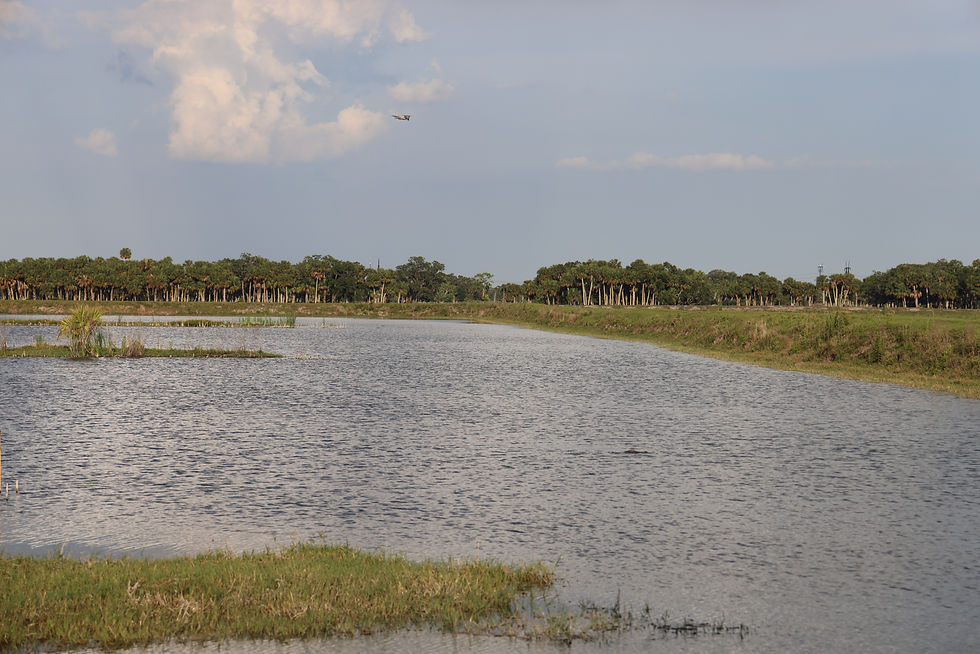
Another project created a 1,622-acre water-storage area capable of holding an average of 2,085 acre-feet of water. In addition to storing water, the project has helped restore wetlands, improve water quality and enhance wildlife habitat while allowing the property to remain part of a working agricultural operation.
That same approach carries into the everyday management of the ranch. Bull Hammock has used rotational grazing to better distribute cattle across pastures, while pipelines and water troughs provide fresh drinking water and help keep cattle away from ditches and other surface waters. Soil and tissue testing help guide nutrient applications, and forage varieties suited to wetter conditions help maintain productive pastures. The ranch has also worked to control exotic and invasive plant species.
For Wes, stewardship is about maintaining a working relationship between ranching, wildlife and water storage, while making sure each can achieve its goals both economically and environmentally.
That philosophy is reflected across Bull Hammock, where cattle, grass, water and wildlife are all part of the same landscape. Managing one inevitably affects the others, making stewardship less about any single project or practice and more about finding a balance that allows the entire operation to remain productive for the future.
The Carlton family’s commitment to the land has earned Bull Hammock recognition over the years, including the Florida Cattlemen’s Association Environmental Stewardship Award and the Florida Commissioner’s Agricultural Environmental Leadership Award in 2015.

But the family’s involvement in Florida agriculture extends beyond the ranch’s fences. Wayne and Wes Carlton both served as presidents of the St. Lucie County Cattlemen’s Association and have been active within the Florida cattle industry. The family has also welcomed groups to Bull Hammock, providing an opportunity for others to see how conservation and cattle production can function together on a working ranch.
For Wes, much of the foundation behind Bull Hammock traces back through the generations that came before him. His great-grandfather, Nathan Holmes, his grandfather, Reuben Carlton, and his father, R. Wayne Carlton, each helped shape the way he approaches ranching and stewardship today.
All three instilled in him a strong work ethic and an understanding that ranching takes “blood, sweat and tears.” From them also came his love for the land, the cattle, the wildlife and the water, along with the responsibility to care for each of them.

Perhaps most importantly, they taught him that the land should be left better than it was found during his “watch.”
That generational connection remains central to Bull Hammock. The operation has long been a family effort, with members filling whatever roles were necessary to keep the ranch moving. Wes’ sister, Mary Anne Cruse, has been involved in managing the company office, while Wes’ wife, Tracy, has helped with the books. Wes and Tracy’s son, Wyatt, became involved full time in the ranch, continuing another generation of the Carlton family’s involvement in the operation.
Florida looks considerably different than it did when the Carlton family arrived more than a century ago, or even when Bull Hammock became part of the family operation nearly 80 years ago. Through those changes, the ranch has continued to adapt while holding onto the principles that helped sustain it across generations.

At Bull Hammock, that means finding ways for cattle production, water management and wildlife habitat to coexist on the same landscape. It means maintaining a productive cattle operation while recognizing the responsibility that comes with caring for the natural resources within its fences. Most importantly, it means understanding that each generation is only one part of a much longer story.
For Wes, this is his watch. His responsibility is to care for what generations before him worked to build and prepare it for those who will follow.
Nearly eight decades after Bull Hammock became part of the Carlton family’s story, the goal remains remarkably simple: leave the land better than they found it and ready for the next generation to take the watch.

